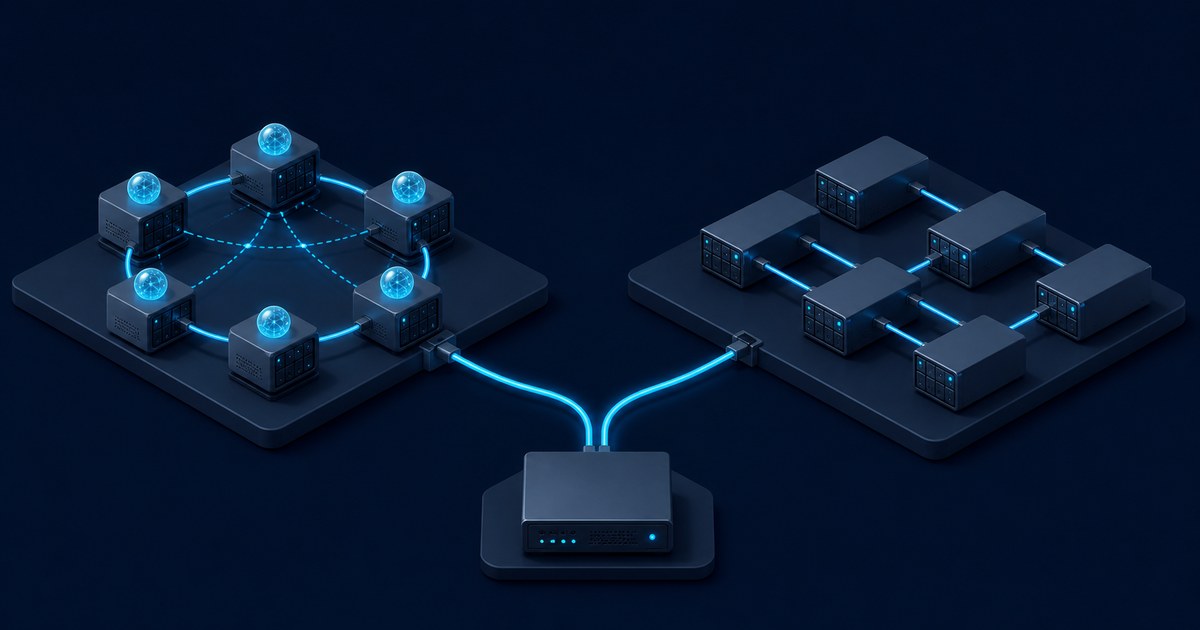
Storage Comparison
Ceph vs Gluster: Which to Choose for Your Cluster
Compare Ceph and GlusterFS by storage model, workload fit, hardware requirements, cluster size, and support o…
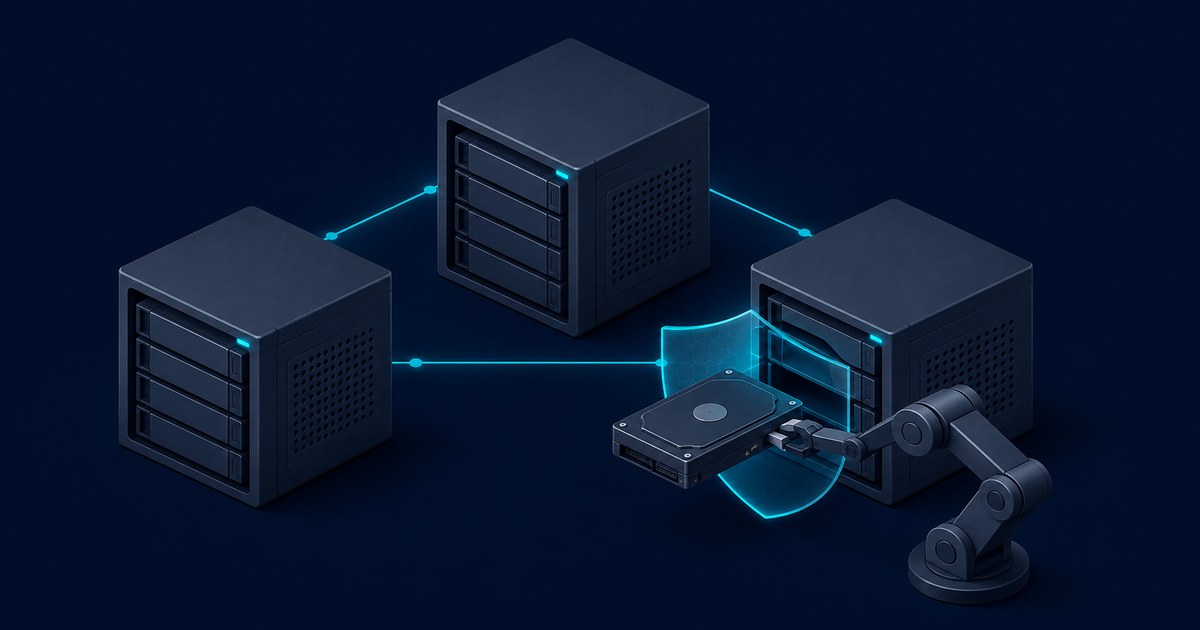 Featured
 Add a Ceph OSD without wiping the wrong disk: verify health, inventory the device, dry-run an OSD spec, deploy it, and watch the rebalance.
Read the article →Compare Ceph and GlusterFS by storage model, workload fit, hardware requirements, cluster size, and support o…

How erasure coding and replication differ in space amplification, failure tolerance and write cost, with a k+…

Ceph CPU, RAM, disks and network requirements: 3 hosts, 1-4 CPU threads/OSD, a 4 GiB RAM target/OSD and 10 Gb…

A triage order for Ceph HEALTH_WARN covering degraded placement groups, nearfull OSDs, missed deep scrubs, au…

Understand replica counts and where data is stored before changing pool settings.
A three-replica pool turns a third of raw storage into usable space. A 4+2 erasure-coded pool turns two thirds of it into usable space, and charges for that in write latency and CPU. The calculator takes an OSD count, a drive size and a redundancy profile, and estimates raw capacity, theoretical usable capacity and the sum of default OSD memory targets.
Open the Ceph erasure coding calculatorExpanding an existing cluster? Follow the guide to add an OSD to Ceph for device checks, a deployment preview and rebalance verification.